
Author: jay

  • Why One Coach Beats Coordinating Multiple Vehicles for Family Travel

    Why One Coach Beats Coordinating Multiple Vehicles for Family Travel

    Last Updated: November 8, 2026

    Quick Summary

    Booking one shared coach eliminates the stress of coordinating multiple vehicles for family travel, because you manage one pickup, one luggage load and one arrival time instead of several. Every extra vehicle adds a driver, a meeting point and a phone call, so a single coach keeps the whole group together from hotel to terminal.

    • Book one vehicle when everyone leaves the same place, for the same place, on the same morning.
    • Multiple vehicles only win when the group splits across destinations, arrival days or schedules.
    • A large suitcase takes up roughly the space of a seated adult in a car boot.
    • Nine or more passengers with cruise luggage makes a coach the practical choice.
    • Agree a meeting point, a backup and one coordinator before running any convoy.
    Tired of juggling taxis for the whole family?We run shared coach transfers from London hotels and airports to Southampton cruise terminals.

    Book Group Coach Transfer

    Table of Contents

    Why Coordinating Multiple Vehicles for Family Travel Wears Everyone Down

    Coordinating multiple vehicles for family travel is the quiet reason so many group trips start badly. Coordinating several vehicles for a group is where transport plans most often fall apart, usually before anyone leaves the hotel lobby.

    One group books three taxis and a rented people carrier. Someone’s flight lands late; another driver takes a different route. By the time everyone reaches the terminal, half the party is queuing at the wrong entrance and the other half is circling for parking. The stress is coordination, not distance.

    Treating vehicle count only as a cost decision overlooks the logistics.

    Below, we break down where multiple vehicles quietly cost more than they save, and how a single shared coach removes the coordination problem entirely.

    Coach Transfer Versus Multiple Taxis in London: A Practical Comparison

    A coach transfer can be a practical alternative to multiple taxis for family travel when the group is staying together and heading to the same destination. The difference is not just cost.

    With taxis, you are managing several pickups, several payment conversations and several arrival times. The UK government guidance on passenger transport licensing sets out how these services are regulated, which is worth knowing when you are comparing operators.

    The comparison most families need is not coach versus taxi in the abstract, but one shared vehicle versus a convoy of two, three or four, each with its own driver, fuel stop and parking problem.

    Side-by-Side Comparison Table

    Factor Single Coach Transfer Multiple Taxis or Rental Cars
    Pickup points One, door-to-door Several, often scattered across hotels and terminals
    Luggage handling Loaded once into the hold Split across boots, with repeated loading and unloading
    Arrival timing Everyone arrives together Party splits by minutes, sometimes by an hour
    Cost structure One group booking Metered or rented per vehicle, plus fuel and tolls
    Coordination needed Minimal Constant phone calls, meeting points and check-ins
    Child seating Arranged in advance Depends on each taxi or rental, and on each driver
    Parking One drop-off at the kerb Several cars circling for terminal or hotel parking
    Driver fatigue None for the group Shared across family members who should be resting

    When Multiple Vehicles Genuinely Win

    Multiple vehicles are genuinely the right choice in a few specific situations.

    • The group splits across different destinations. If one branch of the family is heading to a hotel in one part of the city and another is going straight to the terminal, a single coach is the wrong tool.
    • The group arrives on different days or at different airports. A coach booked for one arrival time cannot absorb a party that lands six hours later.
    • Someone needs to leave early or stay late. A shared vehicle locks everyone to the same schedule, a real constraint for families with medical appointments or work commitments.
    • The group is small enough that a coach is poor value. Two adults and two children with light luggage are usually better off in a single taxi or private car than in a coach sized for twenty.

    For a cruise departure, these exceptions rarely apply: the whole party is going to the same terminal on the same morning, exactly the scenario where a single vehicle removes the coordination problem rather than shifting it.

    The Decision Rule

    A simple rule of thumb: if every passenger is leaving from the same place, going to the same place, on the same morning, book one vehicle.

    If you are weighing up whether the coach is worth it for a family specifically, our guide on whether a coach transfer to Southampton Cruise Port is worth it for families covers the trade-offs in detail.

    The Real Cost of Splitting a Group Across Several Vehicles

    Splitting a group across several vehicles looks cheaper on paper and rarely is. The headline fare is only one line in the budget. The rest hides in plain sight.

    Consider what a family actually pays when they split up:

    • Multiple fares: each taxi or rental is billed separately, with no group discount.
    • Fuel and tolls: rental vehicles need filling, and motorway tolls apply per vehicle.
    • Parking: several cars at the terminal or hotel means several parking charges.
    • Driver time: if family members take turns driving, that is unpaid labour spread across the group.
    • Hidden extras: luggage surcharges, child seat fees and waiting time add up per vehicle.

    A single shared coach folds all of that into one booking.

    The emissions point matters too. Fewer vehicles on the road means a smaller footprint for the same journey, which many families now factor into their plans.

    Matching Group Size, Luggage and Passenger Capacity to the Right Vehicle

    Matching the vehicle to your group is where many transport plans go wrong, since luggage is often underestimated and boot space overestimated.

    The decision comes down to three numbers: how many people are travelling, how many suitcases and pushchairs are coming, and how far you are going. A cruise departure usually means a large suitcase per person plus hand luggage; add a pushchair, travel cot or mobility equipment, and a standard taxi boot fills fast.

    A Capacity Guide You Can Actually Use

    Use this guide as a starting point, then confirm with the operator, because vehicle specifications vary.

    • Under 4 passengers, light luggage: a single taxi or private car is fine. Boot space is rarely the limiting factor.
    • 5 to 8 passengers, mixed luggage: a larger vehicle is usually needed, and luggage space is often the limiting factor.
    • 9 or more passengers with cruise luggage: a coach is the practical choice for group travel.

    A useful rule of thumb: a large suitcase takes up roughly the space of a seated adult in a car boot. Packing for a week-long cruise, the luggage often occupies more floor space than the passengers.

    Child Seats, Accessibility and Differing Needs

    Capacity is not just a headcount. Child seats take up a full seat each, and a child who legally needs a booster cannot be counted as a lap passenger. Tell the operator at booking so seats are arranged in advance rather than improvised at the kerb.

    The Total Cost Comparison

    A single shared coach folds all of that into one booking.

    The emissions point matters too. Fewer vehicles on the road means a smaller footprint for the same journey, which many families now factor into their plans.

    If you are checking whether a coach actually fits your group, our page on the type of vehicles we use shows the options and how luggage is loaded.

    Planning a Family Cruise Transfer with Luggage Without the Last-Minute Panic

    Planning ahead is the best defence against a chaotic departure day. Families who book early, confirm the pickup time and pack with the vehicle in mind avoid almost every problem we see.
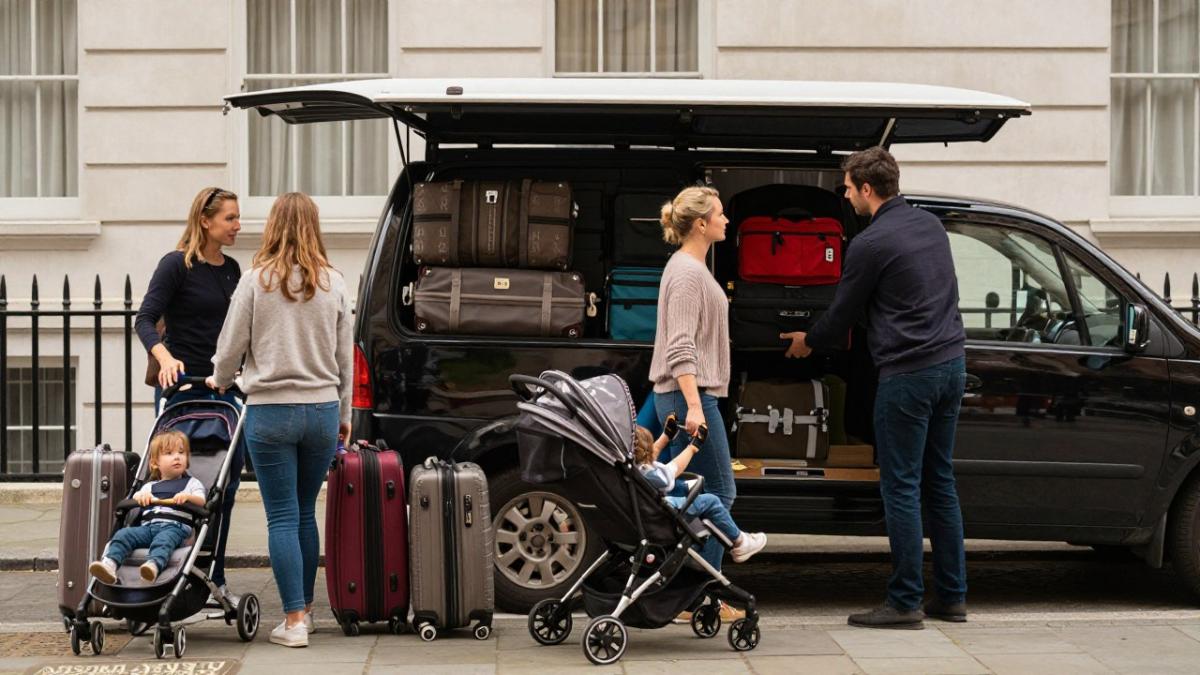
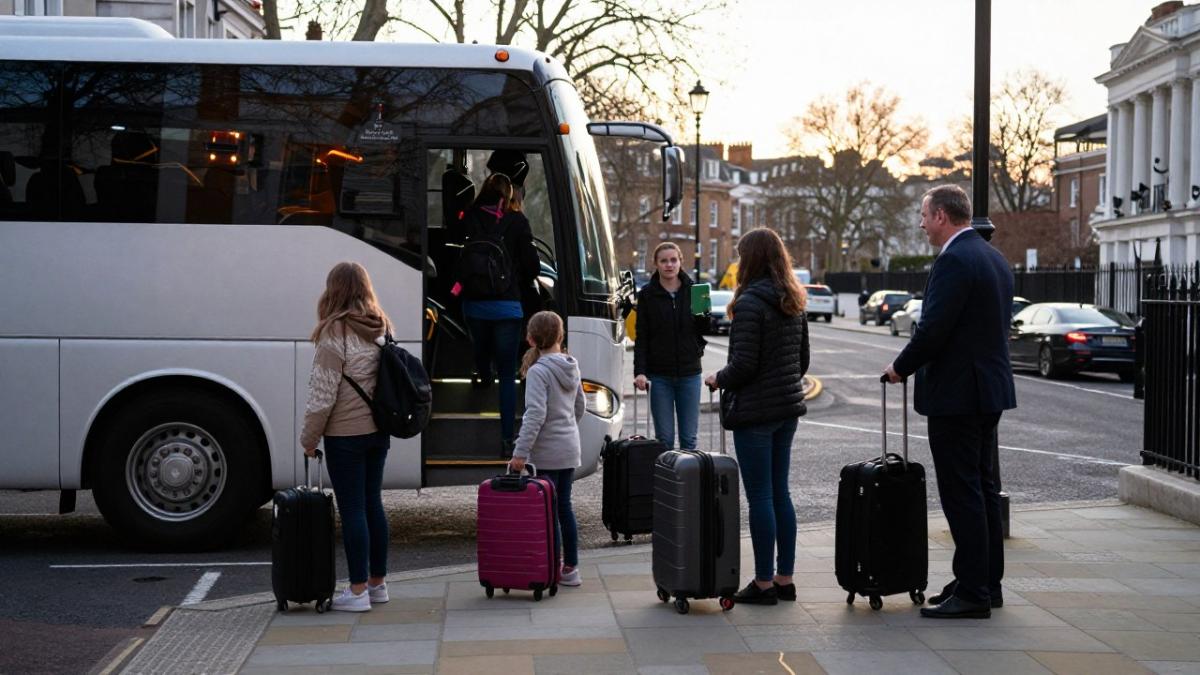
    A driver loads luggage for a family beside a coach while multiple vehicles wait outside a London hotel.
    A driver loads luggage for a family beside a coach while multiple vehicles wait outside a London hotel.

    Start with a realistic timeline: work backward from embarkation time and allow a generous buffer for traffic to the terminal.

    For a step-by-step walkthrough, our guide on how to book a London to Southampton cruise coach takes you from enquiry to confirmed booking.

    Group Transport to Southampton Cruise Terminal: What a Smooth Run Looks Like

    A smooth group transfer to Southampton cruise terminal looks almost boring, and that is the point. Everyone leaves together, arrives together and walks to check-in without a single coordination call.

    Here is how a good run unfolds:

    1. The coach collects the whole group from one London hotel or airport.
    2. Luggage goes straight into the hold, loaded once.
    3. The driver follows a planned route with a scheduled rest stop.
    4. The coach arrives at the correct terminal with time to spare.
    5. Passengers step off refreshed, luggage unloaded at the kerb.

    That is the service we run on our London to Southampton transfers, and it is why families tell us the journey itself became part of the holiday rather than a chore.

    Keeping Children Comfortable and Entertained on the Road

    Children travel far better in a shared coach than in a cramped taxi. There is room to move, a seat for everyone and space to spread out.

    A few practical habits help:

    • Pack a small activity bag per child with a book, a tablet and headphones.
    • Dress children in layers, since coach air conditioning can run cool.
    • Plan a snack and a stretch break into the journey.
    • Keep comfort items, like a favourite blanket, within reach.

    Packing Food, Snacks and Travel Essentials

    Pack food and essentials in one accessible bag rather than buried in the hold. You will want water, easy snacks, wet wipes, hand sanitiser and any medication close at hand.

    A simple checklist keeps packing calm:

    • Water bottles for each passenger
    • Non-perishable snacks
    • Wet wipes and hand sanitiser
    • Any prescription medication
    • Chargers and a power bank
    • A change of clothes for young children

    Watch out: packing snacks in the suitcase instead of a cabin bag is the mistake that leaves hungry children and frustrated parents an hour into the journey.

    Convoy Protocols, Meeting Points and Tools for Keeping Drivers in Step

    Keeping several drivers in step is possible, but it takes deliberate planning. If you are running multiple vehicles, agree on protocols before the day.

    Set a clear meeting point and a backup, share a live location, and nominate one coordinator. Use a group chat for updates and confirm a check-in time at each stop.

    Convoy protocols consume attention, since someone has to run the coordination. A single shared vehicle means there is no convoy to keep in step.

    Preparing for Delays, Emergencies and Differing Family Needs

    Preparing for delays and differing needs is what separates a calm departure from a frantic one. Traffic happens.

    Build in a buffer, keep the group’s contact details in one place, and agree what happens if a pickup runs late.

    When you are ready to secure your group transfer, you can book your transfer and confirm the details in one step.


    Coordinating multiple vehicles for family travel asks a lot of the person holding it all together.

    Frequently Asked Questions

    Is a coach transfer cheaper than booking several taxis for a family?

    When a family or group splits across several taxis, each vehicle carries its own fare. Ask UK London Coaches for a quote to compare the cost of a shared coach with your taxi estimate. Pricing depends on group size, pickup points and date, so request a quote from UK London Coaches for an exact figure before you compare it with multiple taxi fares.

    How do you organise transport for a large family with luggage?

    Start by counting people, suitcases and any bulky items such as pushchairs or mobility aids, then match that to one vehicle with enough passenger and luggage capacity. Book a door-to-door coach transfer with a direct pickup so no one has to change vehicles with bags. Confirm the pickup time against your cruise embarkation, and keep passports and medication in hand luggage rather than the hold.

    How far in advance should you book group transport to Southampton cruise terminal?

    Book as soon as your cruise dates are confirmed. Early booking gives you time to confirm the terminal (Mayflower, Horizon or Ocean), agree a pickup window that leaves a buffer for traffic on the route, and share final passenger and luggage numbers. Last-minute bookings limit vehicle choice and can push you back toward multiple taxis.

    What should you check when booking a family coach transfer?

    Confirm the exact pickup address and time, the terminal drop-off point and what the quote includes, such as luggage and additional pickup stops. Ask the operator how it handles delays and what child seating it can arrange. Keep one phone number for the lead passenger so updates reach the whole group.


  • Why an Overnight Stay Before Your Cruise Beats a Morning Dash

    Why an Overnight Stay Before Your Cruise Beats a Morning Dash

    Last Updated: November 7, 2026

    Quick Summary

    An overnight stay before cruise day protects your sailing date by turning a race against traffic into a calm, controlled morning. You sleep near the terminal, unpack once, and wake up minutes from the ship, removing the risk of a flight delay or closed motorway.

    • Arriving a day early gives you a schedule buffer that money cannot otherwise buy.
    • Start with distance to port, then work backwards from your budget and transport needs.
    • Compare the total cost, not the headline room rate, before you book.
    • Book hotel-to-terminal transport in advance and confirm the terminal name before you travel.
    • Pack a small overnight bag separately so your cruise clothes stay packed.
    Staying overnight before your cruise?We run door-to-door coach transfers from hotels and airports to the cruise terminals.

    Book Your Transfer

    Table of Contents

    Should You Stay the Night Before a Cruise?

    Yes. Planning an overnight stay before cruise day is a practical way to protect your sailing date. A pre-cruise hotel near the port turns a race against traffic into a calm, controlled morning.

    At UK London Coaches, we have spent over 20 years moving cruise passengers between hotels, airports and Southampton terminals. We see the difference a night’s buffer makes. The Cruise Lines International Association guidance backs this up: late arrivals are one of the most common reasons passengers miss embarkation.

    Here is the honest trade-off. An overnight stay adds a hotel booking to your budget. But it removes the biggest single risk to your trip: a flight delay or a closed motorway on the morning of your sailing.

    The Case for Arriving a Day Early

    Arriving a day early gives you a schedule buffer that money cannot otherwise buy. Cruise lines set embarkation windows that close before the ship sails. If your flight is delayed, a same-day dash can become difficult.

    A pre-cruise stay also protects your peace of mind. You sleep near the terminal, you unpack once, and you wake up minutes from the ship. For a deeper look at timing, see our guide on how to ensure timely arrival for cruises and flights.

    When a Same-Day Dash Still Works

    Same-day travel only makes sense in narrow cases. You live within a short drive of the port. Your flight lands early the day before, with a generous buffer. Or you have a fully refundable hotel that you can cancel at no cost.

    For everyone else, the risk is not worth it. A busy port on a peak sailing date leaves no room for error.

    How to Choose a Hotel Near the Cruise Port

    Start with distance to port, then work backwards from your budget and transport needs. The closer the hotel sits to the cruise terminal, the less you rely on the embarkation morning going perfectly. A hotel within a short drive of the terminal reduces the reliance on ground transport on the day.

    Use this decision framework to narrow your shortlist before you compare rates:

    1. Note your flight arrival time. If you land after mid-afternoon, an airport hotel or a port-area hotel with a late check-in policy is the safer choice.
    2. Measure the hotel-to-terminal distance. A short drive means a short transfer and a later, calmer check-out. Confirm the drive time at the hour you will actually travel, not at midday.
    3. Check the cancellation window. A refundable rate protects you if plans shift. Read the deadline, not just the word “refundable”.
    4. Confirm luggage handling. Early bag drop or luggage storage makes embarkation morning easier if your room is not ready.
    5. Check breakfast timing. An early service lets you eat before your transfer rather than on the road.

    Look for these features when you compare hotel bookings:

    • Distance to port: a short drive means a short transfer and a later, calmer check-out
    • Refundable rate: a flexible booking protects you if plans shift
    • Cancellation policy: read it before you pay, not after
    • Luggage handling: early bag drop makes embarkation morning easier
    • Breakfast timing: an early service lets you eat before your transfer

    Airport Hotel or Port-Area Hotel?

    An airport hotel suits late flight arrivals. You land, sleep, and travel to the terminal the next day.

    A port-area hotel suits anyone who wants the shortest possible journey on embarkation morning. You wake up close to the ship and avoid a long ground transportation leg.

    Hotel Type Best For Trade-off
    Airport hotel Late flight arrivals Longer hotel-to-terminal journey
    Port-area hotel Shortest embarkation morning Fewer rooms at busy ports
    City hotel Sightseeing before sailing Longest transfer to the port

    The right choice comes down to your flight arrival and how much you value a short final leg. You might book the port-area hotel first and the airport hotel only when the flight lands late.

    Check the actual drive route and terminal name for any hotel described as “port area”.

    Budgeting for Your Pre-Cruise Night: A Total-Cost View

    An overnight stay before cruise departure is not just a room rate. The total cost includes the hotel, ground transportation, meals and any baggage fees. Compare the whole picture, not the headline price.

    Here is a simple framework we recommend. List each cost before you book:

    • Room rate: the nightly price for your chosen hotel
    • Airport-to-hotel journey: your transfer from the arrival airport
    • Hotel-to-terminal journey: your transfer to the cruise port
    • Meals: dinner and breakfast near the hotel
    • Contingency: a small buffer for delays or changes

    Add these together and compare against the cost of a missed sailing. A flexible, refundable rate often costs a little more, but it protects the larger sum you have already spent on the cruise.

    Pricing for transfers depends on group size, dates and route. Check our website for a current quote.

    Arranging Transport from Hotel to Cruise Terminal

    Book your hotel-to-terminal transport in advance, and confirm the terminal name before you travel. Southampton has several terminals, and a driver who knows the port will drop you at the right one.

    A family loading suitcases onto a coach for their overnight stay before cruise departure from a London hotel.
    A family loading suitcases onto a coach for their overnight stay before cruise departure from a London hotel.

    Cruise-line transport is one option for this leg. Our independent coach transfer offers door-to-door pickup from your hotel, timed to your embarkation window.

    For groups and families, a shared coach avoids coordinating multiple vehicles. If you are arriving by air first, our airport to hotel group transfer guide explains how to move a group smoothly. When you are ready to book the final leg, our transfers to the cruise terminal run directly from city hotels.

    Building a Contingency Plan for Delays

    A pre-booked transfer is only as good as the plan behind it. Build a simple contingency plan before you travel, and share it with your group.

    • Allow a schedule buffer. Aim to reach the terminal at the start of your embarkation window, not the end. A buffer of at least an hour absorbs most traffic delays.
    • Keep the driver’s contact details. Store the transfer company’s number and your booking reference where every traveller can reach them.
    • Know the fallback. If your transfer fails, have a second option in mind: a local taxi rank, a rideshare app, or the cruise line’s own transfer desk at the hotel.
    • Call ahead if you are running late. A short call lets the driver adjust the route or pickup point rather than waiting at the wrong entrance.

    If your flight is delayed and you arrive later than planned, call the hotel to hold your room and call the transfer company to move your pickup time. Contact the transfer company to adjust a booking if your plans change.

    Book an earlier transfer slot where possible to leave room for delays.

    Choosing an Accessible Hotel Before a Cruise

    An accessible hotel before a cruise needs more than a wide doorway. Check the details that matter for mobility, then confirm them directly with the hotel before you book.

    Ask about step-free access from the entrance to the room. Confirm lift access to every floor you will use. Check the bathroom layout, and ask whether the room sits close to the lift.

    For families and groups, add these to your list:

    • Rooms on the same floor for the whole party
    • Space for mobility aids and extra luggage
    • A coach with room to store a wheelchair or walker
    • A driver who can help with boarding and bags

    Confirm access details with the hotel directly before you book.

    What to Pack for an Overnight Stay Before a Cruise

    Pack a small overnight bag separately from your main luggage. This one habit makes the pre-cruise night far easier. You carry less into the hotel, and your cruise clothes stay packed.

    Put these in your overnight bag:

    • A change of clothes and sleepwear
    • Toiletries and any medication
    • Chargers and travel documents
    • A light layer for the transfer
    • Snacks for the journey

    Keep your passport, cruise paperwork and luggage tags in one place. On embarkation morning, you want to move fast without searching.

    Your Planning Timeline and Contingency Plan

    Plan backwards from your sailing date, and build in a buffer at every stage. A clear timeline keeps the pre-cruise stay organised and calm.

    Use this as your checklist:

    • Book the cruise and note the embarkation window
    • Book flights that land the day before sailing
    • Reserve the hotel with a refundable rate where possible
    • Book transfers for airport-to-hotel and hotel-to-terminal
    • Confirm the terminal and pickup time a week before
    • Share driver contact details with your group

    For delays, keep a simple plan. If your flight is disrupted, call the hotel to hold your room. If traffic is heavy on the day, your pre-booked transfer can adjust the route. Our guide on booking a cruise coach walks through the steps in detail.

    Book Your Pre-Cruise Transfer with UK London Coaches

    The overnight stay solves half the problem. The other half is getting from your hotel to the terminal on time, with your group and luggage together.

    That is where we come in. UK London Coaches runs door-to-door shared coach transfers between city hotels, airports and the Southampton cruise terminals. You get direct pickup and drop-off, a comfortable ride, and a driver who knows the port. No juggling multiple vehicles. No hoping for the best on embarkation morning.

    Get started with UK London Coaches and arrive at your ship relaxed, on time and ready to sail.


    Your sailing date will not wait for traffic. Book a pre-cruise transfer that gets your whole group to the terminal together, with luggage handled and timing built around your embarkation window.

    Frequently Asked Questions

    Should you stay the night before a cruise?

    For most travellers flying in or driving more than two hours, yes. An overnight stay before cruise embarkation reduces the risk of a flight delay or traffic jam making you miss the ship. You arrive at the terminal rested, with a schedule buffer, and embarkation morning becomes a short transfer rather than a race. Same-day travel only makes sense if you live close to the port and have a late boarding window.

    How do you arrange transport from your hotel to the cruise terminal?

    Book your transport from hotel to cruise terminal in advance, ideally when you reserve the room. Confirm the pickup time against your embarkation slot, allow a buffer of at least an hour, and check whether the hotel offers a shuttle or whether a shared coach or private transfer suits your group size. Give the operator your terminal name and sailing date so they route you correctly, and keep the confirmation on your phone.

    What should you consider when booking an accessible hotel before a cruise?

    Ask specifically about step-free access from the vehicle drop-off to the room, roll-in showers, and doorway widths rather than relying on a generic accessible room label. Confirm the hotel has a lift to every floor and space to store a mobility scooter or wheelchair overnight. Check the distance to the cruise terminal and whether the transfer vehicle can accommodate mobility equipment, then book early because accessible rooms near busy ports are limited.

    What should you pack for an overnight stay before a cruise?

    Keep a small overnight bag with a change of clothes, toiletries, medications, chargers and travel documents separate from your checked luggage so you are not unpacking a large case for one night. Pack your cruise documents, passport and luggage tags in the bag you keep with you. A refillable water bottle, a light layer for the coach, and a printed copy of your transfer confirmation make embarkation morning smoother.

  • London to Southampton by Road: Distance, Drive Time and Routes

    London to Southampton by Road: Distance, Drive Time and Routes

    Last Updated: November 5, 2026

    Quick Summary

    The London to Southampton distance by road is roughly 80 miles (about 128 km) on the fastest motorway route. Expect 90 minutes to 2 hours in good conditions, but build in 2.5 to 3 hours on a Saturday during peak cruise season. The miles matter far less than the route and the timing.

    • The default route runs M25 to M3 to M27, keeping you on motorway for nearly the whole trip.
    • Saturday is the busiest embarkation day, so the roads into Southampton fill early.
    • A diversion only makes sense if it saves more time than it costs to leave the motorway.
    • Work backwards from your cruise line’s check-in window, not from the ship’s departure time.
    • A shuttle from London to Southampton cruise port is a shared coach dropping you at the cruise terminal.

    Table of Contents

    How Far Is London to Southampton by Road?

    The London to Southampton distance by road is roughly 80 miles (about 128 km) on the fastest motorway route. That figure surprises most first-time cruise passengers. It sounds like a short hop, yet the journey can take anywhere from 90 minutes to well over three hours depending on when you leave.

    A distance that looks trivial on a map can turn into a genuine planning problem on a busy Saturday morning.

    So here is the key point most guides bury: the miles matter far less than the route and the timing. A direct motorway run and a congested one cover the same ground. Only one gets you to the ship on time.

    Below, we break down the drive time, the route choices, and how to time your departure so embarkation day stays calm.

    London to Southampton Drive Time and What Affects It

    Expect 90 minutes to 2 hours in good conditions. Build in 2.5 to 3 hours on a Saturday during peak cruise season.

    The single biggest factor is not distance. It is congestion. The M25 ring road around London is the usual bottleneck, and the M3 carries you south-west towards Southampton. A crash, roadworks, or a bank holiday surge can add an hour without warning.

    What most guides miss is how much the day of the week changes the picture. Saturday is the busiest embarkation day, so the roads into Southampton fill early.

    • Weekday off-peak: fastest runs, lighter traffic
    • Saturday morning: heaviest congestion, plan extra time
    • Bank holidays: unpredictable, treat as a peak day
    • Roadworks or incidents: check live conditions before you set off

    Watch out: relying on a single route with no backup is the most common mistake. If the M3 jams, you need a diversion ready. For a deeper walkthrough, see our guide on how to avoid traffic from London to Southampton for a cruise.

    Choosing Your London to Southampton Route by Car

    The default route runs M25 to M3 to M27, and it is direct and keeps you on motorway for nearly the whole trip.

    But the fastest route is not always the right one on embarkation day. Here is how the main options compare:

    Route Key Roads Best For Watch Out For
    Motorway default M25, M3, M27 Speed, simplicity M25 and M3 congestion
    Western approach M4, A34, M3 Avoiding southeast M25 jams Longer, more turns
    Cross-country A3, A27 Scenic, flexible Slower, town traffic

    When a diversion is actually worth it

    A diversion only makes sense if it saves more time than it costs to leave the motorway. A detour is rarely worthwhile for a short delay, because extra distance, lower speed limits and unfamiliar junctions can eat the gain. Check the live traffic picture before choosing any alternative route.

    How to check before you set off

    Check live traffic conditions along your route before leaving London, as a route set in advance may not reflect current incidents or roadworks.

    Watch out: relying on a single route with no backup is the most common mistake. If the M3 jams, you need a diversion ready. For a deeper walkthrough, see our guide on how to avoid traffic from London to Southampton for a cruise.

    If you would rather skip the driving entirely, our London to Southampton transfers cover this exact journey door to door.

    Heathrow to Southampton Cruise Terminal Transfer Options

    Heathrow to Southampton is a shorter run than central London, and the options still divide clearly. You can drive, take a train with a change, or book a direct transfer. The useful question is which gets you and your luggage to the right terminal with the least risk.

    • Private taxi or Uber: flexible, but cost can climb with traffic and luggage. Door-to-terminal, with no changes, but exposed to congestion and surge pricing.
    • Train via rail station: you still need a taxi to the terminal, and you handle your own bags at both ends. Step-free access varies by station, so check before you travel if you have heavy cases or mobility needs.
    • Shared coach transfer: door-to-terminal with luggage handled on a fixed plan. The trade-off is a set departure time and a shared vehicle.

    The terminal you need depends on your cruise line, so confirm it in advance.

    Book Your Transfer →

    You can read the full breakdown of the best way to get from London to Southampton cruise terminals before you decide.

    Shuttle from London to Southampton Cruise Port: What to Expect

    A shuttle from London to Southampton cruise port is a shared coach that collects passengers from London hotels or airports and drops them at the cruise terminal.

    A driver loading luggage as a family boards a coach from London to Southampton outside a hotel.
    A driver loading luggage as a family boards a coach from London to Southampton outside a hotel.

    The man is American.

    Southampton has several terminals, and getting to the right one matters.

    What most guides miss: the terminal you need depends on your cruise line, not your ticket type. Confirm it in advance.

    Ready to lock in your seat? Here is how to book a London to Southampton cruise coach, step by step.

    Timing Your Departure for Embarkation Day

    Work backwards from your cruise line’s check-in window, not from the ship’s departure time. Check-in usually opens several hours before sailing, and arriving inside that window is what keeps the day smooth.

    Our rule of thumb:

    1. Confirm your terminal and check-in opening time.
    2. Subtract your journey time, plus a buffer.
    3. Add extra on Saturdays and bank holidays.
    4. Leave earlier than feels necessary.

    For a 3 pm embarkation, we would not cut it fine. A morning departure from London gives room for traffic and a relaxed arrival.

    Booking a transfer timed to the last minute leaves little room for delay, so allow a buffer.

    Booking Your Door-to-Terminal Transfer

    The simplest way to protect your embarkation day is to book a door-to-terminal transfer in advance. You get a fixed plan, a direct pickup, and a driver who knows the Southampton terminals.

    UK London Coaches offers shared coach transfers with door-to-door pickup and drop-off, and reduces the need to coordinate multiple vehicles.

    When you are ready, book your transfer and secure your seat.

    Frequently Asked Questions

    How long does it take to drive from London to Southampton?

    Journey time depends on traffic, and the M25 and M3 can slow considerably during peak hours. Allow extra time on busy days so check-in delays do not affect your boarding window.

    What is the best way to get from London to the Southampton cruise terminal with luggage?

    A shared coach transfer can collect you from your hotel and drop you at the cruise terminal. For groups and families, this keeps everyone in one vehicle.

    How much is an Uber from London to Southampton cruise terminal?

    Ride-hailing fares for this journey vary with demand, vehicle size and time of day, and surge pricing on embarkation mornings can push costs well above a pre-booked transfer. Because no fixed rate applies, request a quote from your transfer provider before you travel and confirm what luggage and additional pickups are included.

    How early should I leave London for a Southampton cruise?

    Allow a generous buffer before your cruise line’s check-in window opens, to cover traffic and terminal queues.


    Your cruise will not wait, and the roads into Southampton rarely cooperate on the busiest mornings. Plan the route, time your departure with a buffer, and let someone else handle the driving. Get started with UK London Coaches and arrive at your terminal relaxed, on time, and ready to board.

  • How to Avoid Traffic from London to Southampton for a Cruise

    How to Avoid Traffic from London to Southampton for a Cruise

    Last Updated: November 4, 2026

    Quick Summary

    To avoid traffic on the London to Southampton drive for a cruise, leave central London by mid-morning and aim to reach the terminal with a comfortable buffer, as Saturday traffic builds through the late morning. Check live conditions on the M25 and M3 before setting off and decide your diversion in advance.

    • Most cruise departures fall on a weekend, so you share the road with day-trippers, shoppers and other cruisers.
    • The M25 junctions 10 to 12 at the Wisley and Thorpe interchange are the first pinch point and often the worst.
    • A 7:00-8:00 am departure gives light to moderate traffic and the safest buffer for an afternoon embarkation.
    • Avoid leaving after 11:00 am, when traffic is heavy and unpredictable with little to no buffer.
    • Confirm your exact Southampton terminal the day before, as a terminal change is a disruption no traffic app warns about.

    Table of Contents

    Why the London to Southampton Run Goes Wrong on Embarkation Day

    The most common reason cruise passengers miss their ship from London is not bad luck. It is a departure time planned around a map, not around a Saturday.

    If you want to avoid traffic from London to Southampton for a cruise, plan the journey the way a dispatcher would, not the way a satnav would. At UK London Coaches, we move passengers between London hotels, airports and the Southampton cruise terminals.

    Three things go wrong most often:

    • The Saturday trap. Most cruise departures fall on a weekend, so you are sharing the road with day-trippers, shoppers and other cruisers.
    • The motorway chain. One slow stretch on the M25 or M3 can ripple through the whole journey.
    • The terminal mix-up. Southampton has several cruise terminals, and arriving at the wrong one costs time you did not budget.

    Below, we break down each transport option, the junctions that cause trouble, and a realistic timetable you can copy.

    Train, Road or Coach Transfer for Southampton Cruise Passengers

    A shared coach transfer removes the driving, the parking and the luggage handling from your day, which is why many cruise passengers find it the simplest option. Trains put you in charge of every bag change, while driving gives you control but leaves you with the congestion.

    Here is how the three main choices compare for a London to Southampton cruise terminal transfer:

    Option Journey Time Luggage Handling Traffic Risk Best For
    Shared coach transfer Direct, door to terminal Driver loads and unloads Managed by the operator Families, groups, heavy bags
    Train from Waterloo Fastest rail option You carry every bag Low, but fixed timetables Solo travellers, light packs
    Driving or taxi Flexible start time You load and park Highest, you sit in it Late bookers, small groups
    • Driving. You will use the M3 and M27, and you will need terminal parking or a drop-off plan.
    • Coach. A shared coach can pick you up at your hotel and drop you at the terminal.

    For a deeper comparison of coach transfers for cruise passengers, see our guide on coach transfers for Southampton cruise passengers. If you want the short answer on which mode wins, read the best way to get from London to Southampton cruise terminals.

    The Driving Route: M25, M3 and M27 Junction by Junction

    The standard driving route runs from London out to the M25, south and west onto the M3, then west on the M27 to the Southampton terminals. In good conditions it is a straightforward motorway run.

    Getting from London to the M25

    How you reach the M25 depends on where in London you start. From central London hotels, the usual approach is west along the A4 or the M4 to the M25, or south via the A3. From the east and the airports, the M25 itself is the first leg. The key point is that the M25 is a ring, and which way round you go matters: the western and southern sections carry the traffic heading for the M3, so a clockwise or anticlockwise choice made without checking conditions can add time before you have even left the capital.

    M25 Junctions 10 to 12: the Wisley and Thorpe interchange bottleneck

    This is the first pinch point and often the worst.

    M3 Junction 9 at Winchester and the M27 split

    Junction 9 at Winchester is where the M3 narrows and commuter traffic joins. From there, the M27 split sends you west toward Southampton. The trap is not the junction itself but the signage: miss the M27 turn and you add minutes you did not plan for, often at the point where you are already watching the clock. Keep an eye on the lane guidance rather than following the car in front.

    The M27 approach and terminal choice

    Once on the M27, the route to the terminals depends on which terminal you are assigned. Southampton’s terminals are spread along the waterfront, and the correct exit and approach differ between them. This is why confirming your terminal before you travel is not a formality: the last few minutes of the drive are terminal-specific, and arriving at the wrong one wastes the buffer you built on the motorway.

    What this means for your plan

    Watch out: relying on a single route with no diversion in mind is the mistake that sinks embarkation days. Know one alternative before you leave, and know which junction is most likely to cost you time on the day you are travelling. If you are driving yourself, plan for terminal parking or a drop-off; if you are on a coach, the driver manages the route, which is why the operator’s knowledge of these junctions is worth more than a satnav’s ETA.

    When to Leave London: A Saturday Embarkation Timetable

    For a typical afternoon embarkation, leave central London by mid-morning and aim to be at the terminal with a comfortable buffer. Traffic builds through the late morning on Saturdays, so the earlier window is calmer.

    Use this as your planning baseline:

    Book Your Transfer →

    Departure Time Traffic Conditions Arrival at Terminal Verdict
    7:00-8:00 am Light to moderate Early, plenty of buffer Safest choice
    8:00-9:30 am Building steadily Comfortable buffer Good
    9:30-11:00 am Peak weekend flow Tight buffer Risky
    After 11:00 am Heavy, unpredictable Little to no buffer Avoid

    If you want a step-by-step plan for timing your departure, our guide on how to ensure timely arrival for cruises and flights walks through it.

    Live Traffic Checks and Diversion Plans Before You Set Off

    Checking traffic once before you leave is not a plan. The M25 and M3 can change character within twenty minutes, and a single incident on the M3 westbound can add an hour with no warning on the map you looked at over breakfast. What separates a calm embarkation day from a missed ship is knowing where to look, what to look for, and which alternative you will take before you need it.

    Where to check before you set off

    • A live navigation app, useful for rerouting in the moment, but treat its ETA as optimistic on a Saturday. It does not know about the queue forming at the terminal drop-off.
    • Your transfer operator, if you are booked on a coach, ask what route they are running and whether they are monitoring conditions. A good operator will already have checked before your pickup.
    • Your cruise line’s terminal information, confirm the terminal and check-in window the day before, because a terminal change is the one disruption no traffic app will warn you about.

    What to look for, not just where to look

    A red line on the map is not the same as a problem for your journey. Focus on three things:

    1. Incidents on the M3 between the M25 and Winchester. This is the single stretch most likely to derail a Southampton run. A closure here forces traffic onto the A30 or A33, both of which are slower and less suited to heavy luggage.
    2. Roadworks on the M25 western section. Lane narrowings around Junction 10 and the Thorpe interchange reduce capacity exactly where weekend traffic is already heavy.
    3. The M27 westbound approach to the terminals. Even a short delay here matters because it sits at the end of the journey, when your buffer is thinnest.

    Route-specific alternatives and when a diversion is worthwhile

    Having a diversion in mind is not the same as taking one. A diversion is usually only worth it if the delay on your current route is longer than the extra time the alternative adds. As a rough rule, a motorway incident that is expected to clear within twenty to thirty minutes is often better waited out than diverted around, because the alternative roads clog quickly once everyone reroutes.

    Watch out: a diversion chosen in a panic at the roadside is often worse than the delay it was meant to avoid. Decide your alternative before you leave, and only switch if the live picture clearly justifies it.

    Recheck before the final stretch

    Conditions change. Recheck the live map when you are roughly halfway, and again as you approach the M27. If you are on a coach, the driver is doing this for you; if you are driving, build the recheck into your plan rather than relying on the first look of the day.

    Terminal Arrival: Matching Your Journey to Cruise Check-In Windows

    Arrive at your terminal within your cruise line’s check-in window, not hours before and not at the last minute. Southampton’s terminals each handle different ships, so confirm yours before you travel.

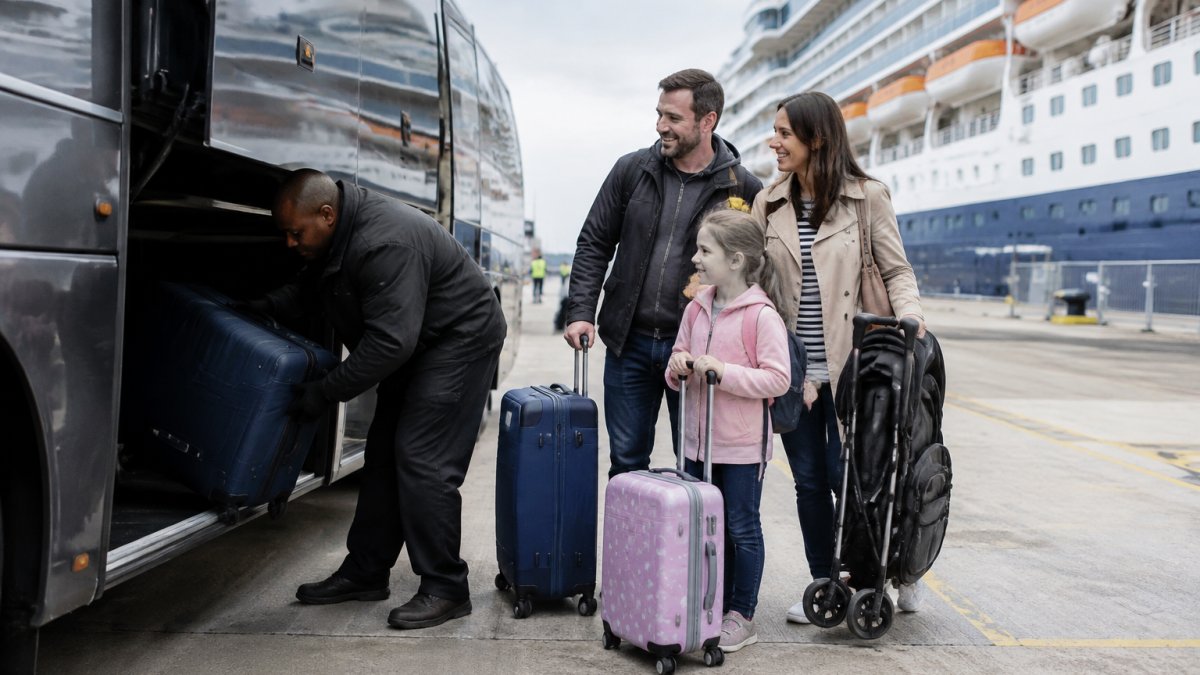
    Family with luggage arriving by coach at a cruise terminal for a London to Southampton journey
    Family with luggage arriving by coach at a cruise terminal for a London to Southampton journey

    Terminal choice matters as much as timing, since arriving at the wrong one wastes the buffer you built. If anyone in your group needs extra help, tell your transfer provider in advance.

    Booking a London to Southampton Cruise Terminal Transfer

    Book your transfer once you have your cruise date and terminal confirmed. Booking early locks in your pickup and gives the operator time to plan the route.

    When you book, confirm:

    • Your London pickup address and time
    • Your exact Southampton terminal
    • The number of passengers and bags
    • Any mobility or accessibility needs
    • The operator’s plan if traffic causes a delay

    You can see the full London to Southampton transfer service and book it directly. If you prefer to understand the process first, our guide on how to book a London to Southampton cruise coach covers each step.

    Book Your Door-to-Terminal Coach Transfer

    The difference between a stressful embarkation day and a calm one often comes down to how you get there. UK London Coaches runs shared, door-to-door coach transfers between London hotels, airports and the Southampton cruise terminals. Our service includes direct pickup and drop-off and shared transport for families and groups. Get started with UK London Coaches and arrive at your ship relaxed and on time.

    Frequently Asked Questions

    What is the best way to travel from London to Southampton for a cruise?

    It depends on how much control you want over the journey. A coach transfer for Southampton cruise passengers removes the driving, the luggage handling and the parking, and drops you at the correct terminal door. The train from Waterloo to Southampton Central is quick but leaves you to move cases between stations and onward to the port. Driving gives flexibility but puts you in the M25 and M3 congestion yourself.

    How early should I leave London to avoid peak traffic for my cruise?

    Work backwards from your cruise line’s check-in opening time and allow a comfortable buffer for the journey and for possible delays. Your cruise line or terminal can confirm the check-in window for your sailing.

    Is a coach or the train better for a London to Southampton cruise terminal transfer?

    Trains are generally quicker for the rail leg, but you will need to reach the station and move your luggage between transport options. A London to Southampton cruise terminal transfer by coach goes door to door, which can simplify the journey for groups and families.

    What happens if traffic is bad and we are running late for embarkation?

    If you are running late, contact your cruise line or terminal as soon as possible to let them know. Check your cruise line’s guidance on late arrivals for your sailing.


    Ready to take the stress out of embarkation day? Book your door-to-terminal coach transfer with UK London Coaches and let us handle the route, the traffic and the luggage while you look forward to the voyage.

  • 7 Horizon Terminal Southampton Pickup Point Steps

    7 Horizon Terminal Southampton Pickup Point Steps

    Last Updated: November 2, 2026

    Quick Summary

    The Horizon Terminal Southampton pickup point is inside the Western Docks, and the exact berth is confirmed against each sailing. Confirm the berth and collection arrangements with the terminal or your transfer operator before you travel, as berth allocations can shift.

    • Confirm the assigned berth, the pick-up area and the driver’s identification before you travel.
    • Give your driver the ship name, berth number and a mobile number that works on the day.
    • Coach transfers suit groups better than a fleet of taxis, keeping the whole party together.
    • Agree a meeting point by name, with the driver displaying the lead passenger’s name and ship name.
    • Book the collection for a realistic slot rather than the ship’s advertised arrival time.

    Table of Contents

    Where the Horizon Terminal Southampton Pickup Point Actually Is

    The Horizon Terminal Southampton pickup point is inside the Western Docks, and the exact berth is confirmed against each sailing. If you are organising a Horizon Terminal Southampton pickup point for arriving cruise passengers, that single address is the fact everything else hangs on. Get it wrong and your driver ends up circling the wrong dock. Get it right and collection takes minutes. This guide from UK London Coaches walks through the seven steps that make a pickup run smoothly, from confirming the berth before you travel to timing collection around disembarkation. Below, we show you exactly how to plan each stage so nobody is left standing on a kerb with three suitcases.

    Berth 102, West Bay Road and Dock Gate 10

    Terminal signage inside the port directs traffic to the Western Docks. Confirm the correct terminal and gate with your transfer operator before you travel, as each Southampton terminal has its own access route and collection area.

    Step 1: Confirm Your Southampton Cruise Terminal Pickup Point Before You Travel

    Confirm the berth and collection arrangements with the terminal or your transfer operator before travel. Berth allocations can shift, and a Southampton cruise terminal pickup point confirmed weeks in advance is not guaranteed on the day. Ask three questions: which berth is assigned, where the designated pick-up area sits relative to the arrivals hall, and what identification the driver should display.

    Passenger checking their phone near a coach at the Horizon Terminal Southampton pickup point under grey skies
    Passenger checking their phone near a coach at the Horizon Terminal Southampton pickup point under grey skies

    Knowing your exact meeting point before you leave home helps avoid confusion on arrival.

    Step 2: Reach the Terminal by Car, Coach or Public Transport

    Reaching Horizon by car means driving into Southampton and following the signed access road to the Western Docks. Coach passengers typically arrive at the coach station in the city centre and continue by taxi or local bus. Public transport users can reach the terminal vicinity by bus, though the final stretch to the Western Docks is not always walkable with heavy luggage. For travellers coming from the capital, London to Southampton transfers cover the full journey door to door, removing the need to juggle train times and taxi connections with a week’s worth of bags.

    Step 3: Arrange a Horizon Cruise Terminal Taxi Pickup

    A Horizon Cruise Terminal taxi pickup works best when the driver knows the designated pick-up area in advance. Private hire and hackney carriages should follow terminal signage to the collection zone, and drivers should confirm the entry arrangements with the port before arrival. Booking ahead is generally sensible, as demand can rise on disembarkation days. Give your driver the ship name, berth number, and a mobile number that works on the day. For passengers heading back to the capital after their cruise, Southampton to London transfers provide a straightforward return journey to city hotels.

    Step 4: Book Horizon Cruise Terminal Coach Transfers

    Coach transfers suit groups far better than a fleet of taxis. A Horizon Cruise Terminal coach transfer carries the whole party together, keeps luggage in one vehicle, and removes the coordination problem of splitting a family across multiple cars. Book through an operator with cruise-specific experience, because terminal access rules, gate procedures, and collection zones differ between Horizon, Mayflower, and City terminals. Group travellers wanting a bookable option can arrange door to door group transfers that collect from London hotels and deliver straight to the terminal forecourt.

    Step 5: Compare Southampton Cruise Terminal Transfer Options

    Southampton cruise terminal transfer options fall into four broad categories, and the right choice depends on party size, luggage volume, and budget.

    Option Best For Watch Out For
    Private taxi Solo travellers, couples Surge demand on disembarkation day
    Shared coach Families, groups Fixed departure times
    Public bus and train Light packers on a budget Final stretch not luggage-friendly
    Pre-booked door-to-door transfer Groups with heavy luggage Book early in peak season

    If you are weighing up whether to book at all, this explanation of why to book a Southampton cruise port transfer after disembarkation sets out the case clearly.

    Step 6: Handle Parking, Waiting and Accessible Pickups

    Avoid waiting on the terminal access roads, and time your approach to the ship’s estimated disembarkation window.

    Book Your Transfer →

    Confirm the collection arrangements, including where the driver should wait, with your transfer operator or the port before you travel.

    For the collection itself, agree a meeting point in advance: the arrivals hall exit is the usual reference, and the driver should display the lead passenger’s name and the ship name. Give the driver a mobile number that works on the day and ask the passenger to switch their phone on as soon as they clear baggage reclaim. If plans change mid-morning, a single text with the new berth or exit is far more useful than a voicemail the driver may not hear.

    Accessible pickups need more lead time, not less. Tell the operator when you book if a passenger uses a wheelchair, a mobility scooter, or needs step-free access, and confirm that the vehicle is suitable and that the collection point sits close to the arrivals exit with a level route. Ask the terminal’s passenger assistance team to note the arrangement, and confirm the day before that the driver knows which exit to use. A common pattern is for the assistance team to bring the passenger to the agreed point, so the driver does not need to enter the hall.

    Step 7: Time Your Collection Around Disembarkation and Traffic

    Disembarkation is not a single moment, it is a sequence. Passengers carrying their own luggage usually leave first, followed by those collecting bags from the terminal, and the whole process can run across a couple of hours on a large ship. Book the collection for a realistic slot rather than the ship’s advertised arrival time, and treat the cruise line’s estimated disembarkation window as the anchor. If the ship is late into berth, the window shifts with it.

    On the morning of travel, check three things before the driver sets off. First, the port’s own live updates for berth changes, gate closures, or security queues. Second, a live traffic service for the M3 and M27 approach and for West Quay Road, because a single incident on the motorway can add a long delay. Third, the cruise line’s app or the terminal’s information line for the current disembarkation status. A driver who checks all three before leaving has a realistic arrival time; one who relies on the schedule alone does not.

    Coordinate the collection after disembarkation with a simple protocol. The passenger texts the driver when they are through baggage reclaim and heading for the exit, the driver confirms their position, and both agree the meeting point by name rather than by description. If the passenger is delayed by passport control or a missing bag, the text goes out immediately so the driver can adjust rather than circle. If the driver is delayed, the same message runs the other way. This two-way confirmation is what separates a smooth pickup from a kerbside search.

    Allow a generous margin on busy cruise days, as traffic and port procedures can add delay. Once your timings are settled, you can book your transfer on the website. If your plans change after you have booked, contact the operator as early as you can with the new ship, berth, or time; a rebooking made the day before is far easier to accommodate than one made at the kerb.

    Frequently Asked Questions

    Where is the pickup point at Horizon Cruise Terminal in Southampton?

    Horizon Cruise Terminal is in the Western Docks, and the exact berth is confirmed against each sailing. Confirm the designated collection point with your transfer operator before you travel. Drivers should follow terminal signage and port staff instructions on the day, because the exact meeting spot can shift with berth allocation and ship schedules. Confirm the arrangement with your transfer provider before you travel so nobody waits at the wrong gate.

    Which dock gate do I use for a Horizon Terminal taxi pickup?

    Follow the port’s terminal signage for Horizon Cruise Terminal and confirm the correct access route with your transfer operator. Each Southampton terminal has its own access arrangements, so give your driver the terminal name and berth number.

    Can a coach collect passengers directly from Horizon Cruise Terminal?

    Confirm with your transfer operator whether a coach collection is available at your terminal. The driver needs the berth number, the ship name and an agreed collection time, and should allow extra minutes for luggage loading. Shared coach transfers work well for families and groups because everyone travels together in one vehicle rather than splitting across several taxis. Book ahead so the operator can confirm the collection point and the arrival window with you.

    How early should I arrange a pickup after disembarking at Horizon Terminal?

    Allow time after your scheduled disembarkation before the vehicle arrives, and confirm timings with your operator. Leaving the ship, collecting luggage and clearing the terminal all take time, and ships sometimes run ahead of or behind schedule. Give your driver the ship name and a mobile number so they can track progress. If you are heading onward to London, build in extra time for traffic on the M3 and M27, and avoid booking a tight connection immediately after your collection slot.

  • How to Compare Cruise Port Parking and Airport Transfers

    How to Compare Cruise Port Parking and Airport Transfers

    Quick Summary

    Cruise port parking is charged per day, so its total cost depends on how many days your car is parked, not just the nightly rate. Comparing it with an airport transfer means adding up the full parking bill, including booking terms and the drive home, and setting that against the per-person transfer fare for your group.

    • Parking is charged per day, so long sailings scale the bill quickly.
    • Check whether the operator charges by calendar day or each 24-hour block.
    • Factor in cancellation and amendment terms, as some reservations are non-refundable.
    • Shared coaches suit solo travellers and couples, while private transfers suit families and groups.
    • Allow a generous buffer before the terminal closes for boarding.

    Table of Contents

    Why the Cheapest Looking Option Is Not Always the Cheapest

    Cruise port parking and airport transfers both get you to the ship, but they rarely cost the same once you add everything up. A parking space may look cheaper per day than a coach fare, yet the true comparison includes how long the car stays, where it is left, and how you get home. Many travellers find that the headline rate tells only part of the story. This guide sets out a practical way to compare the two options on equal terms.

    Cruise Port Parking Costs, Day by Day

    Parking at a cruise port is almost always charged per day, which means the bill scales directly with the length of your sailing rather than with the number of people travelling. That single mechanic is why parking can look cheap on a two-night break and expensive on a two-week voyage, even when the daily rate never changes.

    To compare parking fairly against a transfer, work out the total parked days, not the cruise nights. Most port car parks count a day as a 24-hour period from the moment you drive in, so a sailing that returns late in the evening can tip you into an extra day. If your ship is scheduled back in the afternoon but disembarkation runs long, you may be charged for a day you never planned to use. Confirm whether the operator charges by the calendar day or by each 24-hour block, because the difference matters on longer trips.

    A practical way to build the figure is to add up four things:

    • Daily rate × parked days. This is the headline number, and it is the one most people compare.
    • Advance-booking discount. Some port parking operators offer lower rates when reserved ahead, so it is worth checking the terms before you travel.
    • Cancellation and amendment terms. Some reservations are non-refundable or carry a change fee, which is a real cost if your sailing date moves.
    • The return leg. Parking only gets you to the terminal and back to your car. You still drive home after disembarkation, so factor in fuel and the time that adds to a long travel day.

    Before you book, check the car park’s height restriction and whether it offers a shuttle to the terminal or requires a walk. A cheaper car park a mile from the terminal can cost you more in time and taxi fares than a pricier one at the gate.

    Security and accessibility are part of the value too. Look for gated, patrolled sites with CCTV, and ask about accessible bays close to the terminal entrance if anyone in your party has mobility needs. Vehicle height limits rule out some car parks for taller vans and campervans, so check before you pay.

    Once you have the total parked cost, set it beside the per-person transfer fare for your group. That side-by-side figure, not the daily rate, is the number that tells you which option is genuinely cheaper for your sailing.

    The table below sets out the four parts of a parking bill so you can add them up before comparing with a transfer.

    Cost element What it covers Note
    Daily rate × parked days The headline parking charge Charged per day, so long sailings scale the bill
    Advance-booking discount Lower rates when reserved ahead Check the terms before you travel
    Cancellation and amendment terms Refund or change fees if dates move Some reservations are non-refundable
    The return leg Fuel and time for the drive home Not covered by parking itself

    Airport to Cruise Port Transfer Options and What They Cost

    Travelling from the airport to the port means choosing between shared and private transport. A shared coach picks up several passengers, while a private transfer gives you a dedicated vehicle and a fixed schedule. The right choice depends on your group and itinerary.

    You can see the door-to-door coach routes that UK London Coaches covers on its Routes We Cover – UK London Coaches page, which helps you judge whether a route matches your journey. Pricing depends on the route, the number of passengers and the date of travel, so request a current quote from UK London Coaches before you rely on a figure.

    Cruise Transfer Journey Time and How Much Buffer to Allow

    Journey times between London and Southampton vary with traffic, the time of day and the route your driver takes. Morning departures on a weekday are the most exposed to congestion, while mid-morning sailings are often more predictable. AA guidance on planning road trips and travel time recommends building extra time into any journey where a schedule matters, and that advice applies directly to a cruise embarkation deadline.

    Family with suitcases waiting by a coach for their transfer to cruise port parking early in the morning
    Family with suitcases waiting by a coach for their transfer to cruise port parking early in the morning

    A sensible rule is to allow a generous buffer before the terminal closes for boarding. Arriving early costs you little, while arriving late can mean missing your sailing altogether. Plan to reach the terminal well before the stated boarding window.

    !A family with suitcases waiting beside a coach at a hotel entrance early in the morning, ready for a cruise transfer

    Cruise Terminal Parking for Disabled Passengers and Accessibility

    Passengers with mobility needs should check accessibility before choosing parking. Confirm with the port or your operator before travel what arrangements are available.

    Book Your Transfer →

    Accessibility also matters on the transfer side. Ask in advance whether a coach or vehicle can accommodate wheelchairs, mobility aids or extra luggage, so there are no surprises at the kerb.

    Which Option Suits Your Group, Luggage and Travel Style

    The right choice usually comes down to three variables: how many people are travelling, how much luggage you are moving, and how much control you want over the journey. For a closer look at whether a coach transfer to Southampton suits families and groups, read through the points below. Parking and transfers trade off against each other differently depending on each one.

    Group size is the biggest lever. A shared coach spreads the fare across every passenger, so the per-person cost stays low whether you travel alone or as a couple. A private transfer is charged for the whole vehicle, which means the per-person figure falls sharply as the group grows. For a family of four or a group of six, a single private vehicle can undercut several separate fares, and it keeps everyone together. For a solo traveller or a couple travelling light, the shared coach is usually the more economical route.

    Luggage changes the maths. Parking keeps your bags in your own car until you reach the terminal. Transfers require you to move everything from the kerb to the vehicle and back again. Ask in advance about luggage capacity, whether wheelchairs and mobility aids can be accommodated, and confirm the pickup point before the day.

    Travel style and control. Parking keeps you in charge of your own schedule on the outbound leg, but it leaves you driving home after a long journey and a potentially tiring disembarkation. A transfer removes that burden entirely and gives you a fixed pickup time, which many travellers prefer at the end of a holiday.

    A quick rule of thumb: solo travellers and couples travelling light usually do better with a shared transfer, while families, groups and passengers with substantial luggage often find a private transfer or parking the better value once the total cost is counted.

    Plan for disruption. Flights are delayed, traffic snarls transfers, and ships sometimes return late. With parking, a delayed return sailing simply adds days to your bill, so check the operator’s policy on overstays. With a transfer, confirm what happens if your flight lands late or your ship is delayed, and whether the operator will rebook you or charge again. Building a generous buffer before boarding, and keeping the operator’s contact details with your travel documents, protects you either way.

    Finally, weigh the environmental angle. If sustainability matters to you, that is a further point in favour of shared transfers for smaller parties.

    Booking Your Transfer Before You Sail

    Reserving early is sensible, particularly during busy cruise seasons. You can reserve your seat and receive full travel details directly through the UK London Coaches enquiry form. Have your sailing date, departure terminal, passenger count and luggage details ready before you start. Confirm the pickup point and timing in writing, and keep the reference with your travel documents.

    How to Book a London to Southampton Cruise Coach walks through the reservation steps in order. When you are ready to book, use the Book Your Transfer option on the UK London Coaches website to receive your full travel details.

    Frequently Asked Questions

    Is it cheaper to park at the cruise port or book a transfer?

    It depends on trip length, group size and how many people travel. Port parking is often charged per day, so a week-long cruise can add up quickly for a single car. A shared transfer is charged per person, so the suitability for your group depends on size and luggage. Work out the total for each option, including return transport, before deciding. Check current rates directly with the port or your transfer provider, as prices change.

    What is the difference between cruise port parking and an airport transfer?

    Cruise port parking means you drive your own vehicle to the terminal, leave it for the length of your cruise and collect it on your return. An airport transfer means you travel by coach or vehicle between the airport or your hotel and the cruise terminal without driving yourself. Parking gives you control over your timings and your car, while a transfer removes the need to drive, find a space or manage luggage in a car park after a long journey.

    How long does a transfer from an airport or hotel to a cruise terminal take?

    Journey times vary with traffic, time of day and the route. Allow extra time for the London to Southampton route, and build a buffer before your embarkation deadline. Confirm the cruise line’s recommended arrival time before you travel.

    Is cruise port parking suitable for passengers with limited mobility?

    Ask the port or parking operator about accessible parking bays close to the entrance and their availability. Ask the port or parking operator in advance about accessible spaces and drop-off points. If mobility is a concern for your group, consider whether a door-to-door transfer suits your needs.

  • Is a Coach Transfer to Southampton Cruise Port Worth It for Families?

    Is a Coach Transfer to Southampton Cruise Port Worth It for Families?

    Last Updated: October 30, 2026

    Quick Summary

    A Southampton cruise port transfer is worth it for families of four or more with a week’s luggage, as a shared coach usually wins on cost and space while keeping the group together in one vehicle. A taxi suits smaller groups wanting privacy and door-to-door timing, so choose based on your group size and budget.

    • Judge a transfer on seats, luggage capacity, child seats, pickup point and price structure, in that order.
    • A standard taxi or private car carries three or four passengers comfortably, so larger families may need two vehicles.
    • Count your cases before choosing a vehicle and tell the operator about folding pushchairs at booking.
    • Ask for a written quote listing the total price, waiting allowance, child seats and any additional stops.
    • Allow a generous buffer on embarkation day and confirm which Southampton terminal you need in advance.

    Table of Contents

    What Families Actually Need From a Southampton Cruise Port Transfer

    A Southampton cruise port transfer is a pre-booked ground transportation service that carries passengers and their luggage between London hotels or airports and the cruise terminals at Southampton.

    At UK London Coaches, we run shared coach transfers on the London to Southampton route.

    Below, we break down the real decision: coach versus taxi, what drives the cost, and how to plan for the day when traffic or disembarkation does not cooperate.

    The Criteria That Decide the Booking

    Families should judge a transfer on five things, in this order:

    • Seats and group size: can everyone travel in one vehicle, or will you need two?
    • Luggage capacity: how many suitcases, and is there room for a folded pushchair?
    • Child seats: are they available, and do you need to request them in advance?
    • Pickup and drop-off: hotel door to the correct terminal, not a nearby coach stop.

    Get those five right and the journey looks after itself. Get them wrong and you are the family repacking on a pavement.

    Coach Versus Taxi to Southampton Cruise Port: Which Suits a Family

    For a family of four or more with a week’s luggage, a shared coach usually wins on cost and space, while a taxi wins on privacy and door-to-door timing.

    A standard taxi or private car carries three or four passengers comfortably. Add two children, a pushchair and four large cases and you may be into two-vehicle territory, which can split the group. A coach transfer is designed to keep a group together in one vehicle.

    The trade-off is that shared coaches run to a schedule. You can see the full London to Southampton transfers service and how the shared route works before you decide.

    Southampton Cruise Port Transfer With Luggage: Space, Suitcases and Pushchairs

    Luggage is where family bookings can run into trouble. A Southampton cruise port transfer with luggage should be matched to the actual number of cases, not only the number of passengers.

    A driver loading luggage and a pushchair for a Southampton cruise port transfer family.
    A driver loading luggage and a pushchair for a Southampton cruise port transfer family.

    Count the cases first, then choose the vehicle, and tell the operator at booking about any folding pushchairs so the right vehicle is assigned. For details of the vehicles available, see the type of vehicles page.

    Watch out: booking a “private car” for four adults plus two children and assuming the boot will take six large cases. Check vehicle luggage capacity before booking.

    Heathrow to Southampton Cruise Terminal Shuttle Options Compared

    A Heathrow to Southampton cruise terminal shuttle is the transfer most international families book, and the options split into three types: shared coach, private car and larger private vehicles. Each suits a different group size and budget.

    Option Best for Luggage fit Child seats
    Shared coach transfer Families of 4+ on a set schedule Good, hold space per passenger Request at booking
    Private car Couples and small families Limited to boot size Request at booking
    Private people carrier or minibus Groups and families with pushchairs Best for high case counts Request at booking

    Shared coaches fill one vehicle with several passengers, while private cars give you a departure time you control. If you are arriving at Heathrow and want to know whether a Southampton cruise terminal transfer suits cruise passengers, our Southampton cruise terminal transfers page confirms how the service handles airport arrivals and terminal drop-offs.

    Southampton Cruise Terminal Transfer Cost: What Drives the Price

    Southampton cruise terminal transfer cost depends on factors such as vehicle size, group size, route and timing. Pricing depends on quantity, dates and the route, so ask for a quote for your own group, route and luggage.

    Here is what actually moves the price:

    • Vehicle size: larger vehicles cost more in total, but the cost per person can differ depending on how full the vehicle is. Ask for a quote for your group size.
    • Route: a transfer from a central London hotel is a different journey from one starting at Heathrow, and both differ from a Southampton hotel pickup. Longer routes and airport pickups carry higher base costs.
    • Group size: pricing may depend on group size and vehicle. Ask for a quote for your group.
    • Waiting time: confirm in writing whether any waiting time at the terminal or airport is included, because a delayed disembarkation can affect the final cost.

    How to Build a Like-for-Like Comparison

    Because operators structure quotes differently, the only fair comparison is a written quote that states what is included. Ask every provider for the same four things: the total price for your exact group and luggage count, the waiting allowance included, whether child seats are included or extra, and whether additional stops are charged.

    Book Your Transfer →

    Compare the total cost for your trip, including any extras, rather than only the headline figure.

    Pro Tip
    Ask for the quote in writing with the vehicle type, passenger count, case count and any extras listed. If an operator will not put the inclusions in writing, treat that as a warning sign.

    For current pricing on your route and group size, request a quote directly from UK London Coaches. Pricing depends on quantity, dates and departure times, so a quote for your dates is the figure to compare.

    Child Seats, Accessibility and Passenger Assistance on Transfer Day

    Child seats and passenger assistance should be requested when you book, so the right arrangements can be made in advance. Confirm the details with UK London Coaches before you travel.

    Child Seats: What to Ask Before You Book

    Child-seat availability varies by operator and by vehicle, so confirm the following at booking rather than assuming:

    • Seat type by age and size: ask which seat types the operator carries, infant carrier, forward-facing child seat, booster cushion, and match them to your child’s age, weight and height. A booster cushion is not suitable for a toddler, and an infant carrier is not suitable for a school-age child.
    • Whether seats are included or extra: some operators include child seats in the quote, others charge per seat. Ask for the cost to be shown separately so you can compare like for like.
    • Fitting arrangements: ask whether the driver fits the seat before departure and whether you can check the fit yourself. A seat that is the wrong size or poorly fitted is worse than no seat at all.
    • Bringing your own seat: if your child needs a specific seat, or you are travelling with a child who is difficult to fit, ask whether you can bring your own seat and whether the operator will store it during the cruise. Many families find this the most reliable option for infants.
    • Number of children: confirm the operator has enough seats for every child in your group, not just one. A vehicle with a single booster is no use to a family with three young children.
    Watch Out
    Do not assume a “private car” includes child seats. Confirm the seat type, the number of seats and whether they are included in the price before you pay a deposit.

    Accessibility and Passenger Assistance

    Accessibility needs should be raised at booking so the right vehicle and driver are assigned. Tell the booking team:

    • Whether anyone in the group uses a wheelchair or walking aid, and whether the wheelchair is folding or powered. Not every vehicle can carry a powered wheelchair, and the luggage hold space differs by vehicle size.
    • If elderly parents need extra time boarding or help with bags, so the driver can allow for it.
    • Whether you need the driver to meet you inside the terminal rather than at a coach stop, which is often the difference between a calm start and a stressful one for families with young children or mobility needs.
    • Whether the vehicle can accommodate a pushchair in the hold rather than the cabin, and how many folded pushchairs the hold will take alongside your cases.

    Whatever you book, confirm the assistance arrangements in writing so the driver arrives prepared. Families who want a step up in service and privacy can ask about a private transfer upgrade, which gives you the vehicle to yourselves and more control over timing and seat fitting.

    When Traffic or Disembarkation Runs Late: Contingency Planning

    Late traffic on the London to Southampton route and slow disembarkation at the terminal are the two disruptions families worry about most, and both are manageable with the right plan. Build in a buffer, know your terminal, and keep the driver’s contact details to hand.

    A few practical steps:

    • Allow a generous buffer on embarkation day. Aim to arrive at the terminal well before your cruise line’s check-in deadline, not at it.
    • Confirm your terminal in advance. Southampton has more than one cruise terminal, and they are not interchangeable.
    • Keep the driver informed if your flight or disembarkation is running late, so the pickup can be adjusted.
    • Check the waiting allowance included in your booking, so you know how long the driver will hold.

    Watch out: booking a transfer timed to arrive exactly at the check-in window. One traffic hold on the motorway and the buffer is gone. Earlier is always safer on cruise day.

    Book Your Family Transfer and Confirm the Details That Matter

    The best family transfer is the one where nothing is left to guesswork: right vehicle, right terminal, right time, and a price you agreed before you travelled.

    At UK London Coaches, we have spent over 20 years moving families and groups between London hotels, airports and the Southampton cruise terminals. To reserve your seats and confirm the details that matter for your family, book your transfer today.

    Frequently Asked Questions

    Is a coach or a taxi better for a family travelling to Southampton cruise port?

    It depends on group size and luggage. A taxi works for two adults with two cases, but a family of four or more with a week’s luggage usually needs a larger vehicle or a coach transfer, because a standard taxi cannot fit the cases. A Southampton cruise port transfer by shared coach keeps the group together, avoids splitting into multiple cars and usually costs less per person. Check the luggage allowance and vehicle capacity before booking either option.

    How much luggage can a family take on a Southampton cruise transfer?

    Allowances vary by operator and vehicle, so confirm the figure when you book. Vehicle luggage capacity differs by vehicle, so ask for the capacity of the vehicle you are considering. Ask whether pushchairs count towards the allowance and whether there is a charge for extra cases. A Southampton cruise port transfer with luggage should be quoted on your actual case count, not a generic estimate.

    Can you book a door-to-door transfer from a London hotel to Southampton cruise terminal?

    Yes. UK London Coaches offers door-to-door shared coach transfers. Give the full hotel address and terminal name at booking so the pickup can be arranged. Door-to-door service removes the need to haul cases to a station or coach stop, which matters most with children and older travellers in the group.

    How early should a family leave for Southampton cruise port?

    Build in more time than the drive alone suggests. Allow extra time for traffic on the London to Southampton route, especially on cruise turnaround days. Ask UK London Coaches what contingency arrangements apply if traffic delays the journey.

    What does a Southampton cruise terminal transfer cost include?

    Ask UK London Coaches for a written quote showing what is included, including whether waiting time at the terminal or airport and child seats are covered. Pricing depends on quantity, dates and departure times.


    Planning a cruise should not include a last-minute scramble for a second taxi. Get started with UK London Coaches and travel to Southampton in one comfortable vehicle, with your luggage accounted for and your group seated together.

  • How to Book a London to Southampton Cruise Coach

    How to Book a London to Southampton Cruise Coach

    Last Updated: October 28, 2026

    Quick Summary

    To book a London to Southampton cruise coach, first confirm your cruise terminal (Mayflower, Horizon or Ocean) and embarkation time from your cruise documents. Then choose a Southampton cruise coach pick-up point close to your London accommodation and book with an operator offering shared or door-to-door transfers.

    • Southampton has more than one cruise terminal, so confirm Mayflower, Horizon or Ocean before booking.
    • Work backwards from your boarding time, adding the check-in window, journey and a buffer.
    • Cruise line coaches use fixed points and set times tied to the cruise schedule.
    • Label every suitcase with your name and ship, and keep documents in a carry-on bag.
    • Check your confirmation a day before travel to reconfirm pick-up time and terminal name.

    Table of Contents

    Step 1: Confirm Your Cruise Terminal and Embarkation Time

    Booking a London to Southampton cruise coach starts with one detail most travellers get wrong: the terminal name. Southampton has more than one cruise terminal, and they sit in different parts of the port (Associated British Ports). Get the terminal right before you book anything, and the rest of your London to Southampton cruise coach booking falls into place.

    Your cruise documents may list the cruise line, ship name, and terminal. Check them now, not on the morning of travel.

    Embarkation time matters just as much as the terminal. Cruise lines usually open check-in several hours before the ship sails, and the gangway closes well before departure. Plan to arrive at the terminal with time to spare, not at the last minute.

    A simple rule: work backwards from your boarding time. Add the terminal check-in window, then the journey, then a buffer. That gives you your London departure time.

    Mayflower, Horizon, and Ocean: Know Your Terminal

    Southampton’s cruise terminals each serve different ships and berths. Your cruise line assigns your terminal, and the assignment is not always obvious from your ticket.

    • Mayflower Terminal: a common berth for larger ships
    • Horizon Terminal: serves a range of cruise lines
    • Ocean Terminal: another key berth in the port

    The terminal name appears on your cruise line’s travel documents and e-tickets. If you cannot find it, call your cruise line directly. Do not guess, and do not assume your coach driver will know which ship is yours.

    Watch out: arriving at the wrong terminal means a taxi ride across the port with all your luggage, right when you should be checking in. Confirm the name before you book.

    Step 2: Choose Your Southampton Cruise Coach Pick-Up Point

    Your Southampton cruise coach pick-up point decides how your travel day begins.

    Pick a point close to where you are staying. Dragging suitcases across London to reach a distant pick-up adds stress you do not need.

    Confirm the exact address and the meeting time when you book. Ask whether the driver waits inside the lobby or outside on the street. Small details like this save confusion on the day.

    If you are weighing up your options, what is the best way to get from London to Southampton cruise terminals sets out the pick-up choices in plain terms, including how shared coach transfers work from central London hotels.

    Step 3: Compare Cruise Line Coach Transfers to Southampton With Shared Options

    Here is how the two compare:

    Option Pick-Up Flexibility Timing Control Best For
    Cruise line coach Fixed points, set times Tied to cruise schedule Passengers on a cruise package
    Shared coach service Hotel or hub pick-up Multiple departure times Independent travellers and groups
    Private car Door to door Fully flexible Solo travellers wanting privacy

    When you are ready to see the actual service, you can book a London to Southampton transfer that runs door to door from your hotel to the cruise terminal. For a deeper look at how shared coaches work for cruise passengers, this guide on coach transfers for Southampton cruise passengers covers the details.

    Step 4: Plan Around the London to Southampton Coach Journey Time

    The London to Southampton coach journey time is one factor to consider when planning. Traffic can vary by time of day.

    Book Your Transfer →

    Build in a buffer. A common approach is to leave earlier than you think you need to, especially for a same-day cruise departure.

    Ask your operator for an estimated arrival time at the terminal, not just a departure time. Then compare that to your check-in window.

    Step 5: Pack and Prepare for Luggage and Group Travel

    Luggage is one factor to consider when planning group travel.

    A driver loading luggage onto a Southampton cruise coach outside a London hotel at sunrise.
    A driver loading luggage onto a Southampton cruise coach outside a London hotel at sunrise.

    Pack with the coach in mind:

    • Label every suitcase with your name and ship
    • Keep passports and cruise documents in a carry-on bag
    • Pack one change of clothes in your hand luggage
    • Confirm the luggage allowance when you book

    For groups, agree a meeting time at the pick-up point and share the schedule with the whole party the night before.

    Step 6: Book Southampton Cruise Terminal Transfers and Confirm Your Details

    Booking Southampton cruise terminal transfers takes a few minutes if you have your details ready. Have your cruise line, ship, terminal, pick-up address, and passenger count to hand.

    If you want to know how to reserve a seat step by step, how do I book an airport or cruise terminal transfer walks through the process from enquiry to confirmation.

    Check your confirmation a day before travel. Confirm the pick-up time and the terminal name one more time. Then you can relax. You can also read about booking confirmation and travel details to know what to expect after you book.

    Common Mistakes to Avoid When Booking Your Coach

    Here are some points to consider:

    • Guessing the terminal. Always confirm Mayflower, Horizon, or Ocean from your cruise documents.
    • Booking too late in the day. Leave a wide buffer before your boarding window.
    • Underestimating luggage. Tell the operator how many bags you have when you book.
    • Forgetting the group. Share the pick-up time with everyone travelling together.
    • Ignoring the confirmation. Read it and check the details before you travel.

    Book Your Transfer With UK London Coaches

    The challenge is simple: get your group, your luggage, and your timing right, all on the day your cruise sails. UK London Coaches offers shared coach transfers, with door-to-door service and specialised routes between London and Southampton.

    Our service includes direct pickup and drop-off, shared coach transfers, and specialised routes between London, Southampton, and London airports.

    Get started with UK London Coaches and book your transfer with confidence, knowing your seat to the terminal is sorted before you leave home.

    Frequently Asked Questions

    How do I book a coach from London to Southampton for a cruise?

    Start by confirming your cruise terminal and embarkation time, then look into transfer options. Check the booking details with the operator before travel day.

    How long does the coach journey from London to Southampton take?

    Journey time and traffic conditions can vary. Confirm your operator’s estimated arrival time when booking and allow time before embarkation.

    Where do cruise coaches pick up passengers in London?

    Pick-up locations and arrangements vary by service. Confirm the exact pick-up address and time with the operator when booking.

    How much luggage can I take on a cruise coach transfer?

    Confirm the luggage arrangements with the operator when booking, especially if you are travelling with a group or have mobility equipment. Keeping important documents with you during the journey is sensible.

  • Why book a Southampton cruise port transfer after disembarkation?

    Why book a Southampton cruise port transfer after disembarkation?

    Last Updated: 26 October 2026

    Quick Summary

    A cruise port transfer removes the stress of arranging transport from Southampton cruise terminal after disembarkation, allowing you to reach your hotel, airport or next destination without the headache of coordinating logistics on an already complex day.

    • Allow time to collect luggage and exit the terminal before your transfer pickup.
    • Provide your cruise ship name, disembarkation date and destination address when booking.
    • Confirm which Southampton terminal you’ll use and ask about drop-off arrangements with your provider.
    • Ask the provider how they handle cruise disembarkation timings and what happens if your ship runs late.
    • Shared coach transfers are available for individuals and groups travelling from Southampton cruise port.

    Table of Contents

    The stress of disembarkation and onward travel

    Cruise disembarkation can involve finding your way to London, arranging transport and coordinating with family members.

    Most cruise passengers face the same problem: how do you get from Southampton cruise terminal to your hotel, airport, or next destination without the headache? Explore coach transfers for Southampton cruise passengers to understand your options. A cruise port transfer can help with onward travel planning.

    This is where booking a Southampton cruise port transfer makes sense. You’ve already paid for your cruise. Adding reliable ground transport removes one more variable from an already complex day.

    Understanding cruise disembarkation transfer timing

    The timing of your cruise port transfer matters more than most passengers realise. If you’re heading to a London hotel, consider how your transport timing fits your disembarkation plans.

    After disembarkation, allow time to collect your luggage and exit the terminal.

    Booking your transfer in advance can help with planning.

    When booking, ask how the provider handles cruise disembarkation timings.

    Southampton cruise terminal to London transfer: why it matters

    Cruise passengers travelling between Southampton and London may need to reach a hotel or continue their onward journey.

    When planning this journey, consider traffic and how you will manage your luggage.

    You can book a cruise transfer with confidence.

    For passengers staying in London before their cruise, plan the return journey to Southampton with embarkation timing in mind.

    The case for a shared coach from Southampton cruise port

    A shared coach is one option to consider for travel from Southampton cruise port.

    Shared coaches carry multiple passengers in one vehicle.

    Consider your group’s comfort and luggage needs when choosing transport.

    If you are considering a shared coach, ask the provider about pickup times and the route.

    The Door to Door Shared Coach Transfers option is available for individuals and groups.

    How to book a cruise transfer with confidence

    When booking a cruise transfer, consider having your cruise ship name, disembarkation date and destination address to hand.

    When contacting a transfer provider, explain that you’re a cruise passenger and ask how pickup timing is handled.

    Book Your Transfer →

    When booking, confirm which Southampton terminal you will use and ask the provider about the drop-off arrangements.

    Ask the provider about luggage, any additional charges and what happens if your ship runs late.

    How do I book an airport or cruise terminal transfer with UK London Coaches? explains the booking process.

    Ask the provider about payment arrangements before booking.

    What to expect on your transfer day

    On transfer day, follow the arrangements you have made for leaving the ship and handling your luggage.

    Before travel, ask the provider how to identify your pickup and what assistance is available with luggage.

    Professional coach driver loading luggage for a cruise port transfer at Southampton terminal in morning light
    Professional coach driver loading luggage for a cruise port transfer at Southampton terminal in morning light

    Ask the provider how route planning and communication about delays are handled.

    You may wish to plan how you would like to spend the journey after your cruise.

    Confirm the drop-off arrangements for your hotel or address with the provider before travelling.

    Booking your Southampton transfer today

    Booking your transfer is the final piece of your cruise planning. You’ve booked your cruise. You’ve arranged your flights. Now arrange your ground transport.

    Check availability and booking arrangements with the provider in advance.

    Is the UK London Coaches service suitable for cruise passengers travelling to Southampton? provides information about the service.

    When you’re ready, book your transfer.

    A cruise port transfer is one option to consider when planning onward travel after disembarkation.

    Frequently Asked Questions

    How long should I allow to leave the cruise terminal after disembarkation?

    Allow time for disembarkation, baggage collection and meeting your transfer. Confirm pickup arrangements with the provider in advance.

    What’s the difference between a shared coach and a private transfer after disembarkation?

    A shared coach carries multiple passengers. Ask the provider about its route, service arrangements and current pricing.

    What information do I need when booking a cruise transfer?

    Ask the provider what information is needed when booking your cruise transfer.

    Can I book a transfer from Southampton to a London airport?

    Ask the provider whether a transfer from Southampton to your London airport is available and confirm the arrangements.


    Disembarkation doesn’t have to be stressful. UK London Coaches handles the logistics so you don’t have to. Our door-to-door shared coach transfers mean you arrive at your London hotel on time, every time. Book your transfer now and enjoy the start of your holiday without the hassle.

  • 7 Steps to Ensure Timely Arrival for Cruises and Flights

    7 Steps to Ensure Timely Arrival for Cruises and Flights

    Last Updated: 25 October 2026

    Quick Summary

    To ensure timely arrival for cruises and flights, fly in at least one day before your cruise departs, and two days for long-haul routes from the United States. Pre-book a door-to-door airport transfer to the cruise terminal so no taxi queue or terminal confusion stands between you and the ship.

    • Fly in at least one day before your cruise, or two days for long-haul flights from the United States.
    • Flying to the port on embarkation day is the riskiest option because ships do not wait for late flights.
    • Confirm in writing which Southampton terminal your ship sails from before you book any transfer.
    • State mobility equipment when booking accessible transfers and confirm step-free access to the vehicle.
    • Morning routes into the port are busiest before midday, so build traffic into your buffer.

    Table of Contents

    Why Timely Arrival Starts Weeks Before You Leave

    Timely arrival is not something you fix on the morning of your cruise. It is the result of decisions you make weeks earlier, and this guide from UK London Coaches walks through the seven steps that matter most.

    Most missed embarkations do not happen because of one disaster. They happen because of three small delays stacking up on the same morning. A late flight, a slow baggage claim, a coach that was booked for the wrong terminal.

    The good news: every one of those delays is predictable. And predictable problems can be planned around.

    Here is the mental shift that changes everything. Stop thinking about your cruise departure time and start thinking about your arrival buffer. That buffer is the gap between when you expect to reach the terminal and when the ship actually sails. Protect it like luggage.

    • Same-day flights leave you no room to recover from delays
    • Pre-cruise hotel nights near the port absorb almost any disruption
    • A booked transfer removes the taxi queue from your morning entirely
    • Written confirmation of your terminal stops you guessing on the day

    We have spent over 20 years moving passengers between London hotels, airports, and Southampton cruise terminals. The pattern is consistent: the calmest travellers are the ones who planned the boring details first.

    Below, we will show you exactly how to build that plan, step by step, so nothing is left to luck.

    How Far in Advance to Fly Before a Cruise

    Fly in at least one day before your cruise departs. For long-haul flights from the United States, two days is the safer choice.

    That single rule prevents more missed ships than any other. Airlines run late, connections break, and weather does not check your itinerary. A buffer day turns a crisis into an inconvenience.

    How far in advance to fly before a cruise depends on three things:

    • Flight distance: long-haul routes carry more delay risk than short hops
    • Connection count: every extra leg multiplies the chance of a missed link
    • Season: winter weather and peak travel periods both add risk

    A common mistake is booking the cheapest flight with two connections to save money. One missed connection can cost you the entire cruise. The savings rarely justify it.

    Watch out: if your flight lands the same day your ship sails, a single two-hour delay can end your holiday before it starts.

    Flying to Cruise Port on Embarkation Day: Risks and Alternatives

    Flying to the cruise port on embarkation day is possible, but it is the riskiest option on this list. Ships do not wait for late flights.

    Here is what most guides miss. The danger is not the flight itself. It is everything after it.

    • Baggage claim can take far longer than expected
    • Immigration queues vary wildly by arrival time
    • Road traffic near the port builds through the morning
    • Terminal check-in closes well before the ship sails

    If you must fly in on the day, take the earliest flight available. Then remove every other variable. Pre-book your ground transport so no taxi queue stands between you and the ship. For passengers weighing a port-to-airport connection, our Southampton to airport transfers show how a booked drop-off removes that final unknown.

    The alternative is simple and far calmer: arrive a day early, stay near the port, and board rested.

    Booking a Cruise Airport Transfer to Port

    A cruise airport transfer to port is a pre-booked, door-to-door service that takes you from your airport or hotel directly to your cruise terminal. It removes taxi queues, fare surprises, and terminal confusion in one move.

    This is where the morning usually goes wrong. Not on the plane. On the pavement outside arrivals, with four suitcases and no plan.

    Book Your Transfer →

    When you book a shared coach transfer, you get a fixed pickup, a driver who knows the terminals, and space for the luggage. No splitting your group across two taxis. No hoping a ride is available at peak time.

    A family with several suitcases being greeted by a uniformed coach driver beside a large white coach outside a London hotel, with the driver helping load luggage into the hold
    A family with several suitcases being greeted by a uniformed coach driver beside a large white coach outside a London hotel, with the driver helping load luggage into the hold

    Before you book, confirm three things:

    • Which terminal your ship sails from, and that the operator covers it
    • The pickup time and where exactly the coach collects you
    • Luggage allowance, so nothing is a surprise on the day

    Our London to Southampton transfers run door to door from London hotels to the cruise terminals. If you are still deciding whether a shared coach suits your trip, this guide to Southampton cruise passenger coach travel covers the details.

    Accessible Cruise Transfers for Passengers with Mobility Needs

    Accessible cruise transfers are services planned around passengers who need extra help, from step-free boarding to space for mobility equipment. They should be arranged in advance, never left to the day.

    Travelling with elderly parents or a family member who uses a wheelchair changes the planning. It does not make the trip harder, as long as you ask the right questions early.

    • Confirm step-free access to the vehicle before booking
    • State mobility equipment at the time of booking, not on arrival
    • Allow extra time for boarding and luggage handling
    • Keep the group together so nobody is separated during loading

    A shared coach works well for many families. When it does not fit your needs, you can upgrade to a private transfer for a more tailored journey.

    Common Pitfalls That Derail Timely Arrival

    The same handful of mistakes cause most late arrivals. None of them are dramatic. All of them are avoidable.

    • Booking the wrong terminal: ships use different Southampton terminals, so confirm yours
    • Cutting the buffer too fine: a tight connection feels efficient until it is not
    • Ignoring traffic patterns: morning routes into the port are busiest before midday
    • Overpacking: too many bags slow every step, from claim to coach
    • No written confirmation: verbal plans get lost, so keep everything in writing
    • Splitting the group across vehicles: one late taxi delays everyone

    What most guides miss is that these pitfalls compound. Two small ones on the same morning can cost you an hour.

    Pitfall Fix Why It Matters
    Wrong terminal Confirm terminal in writing Driver drops you at the right door
    Tight buffer Add a pre-cruise night Absorbs flight delays
    No transfer booked Pre-book door-to-door coach Removes taxi queue
    Group split up Travel together in one vehicle Nobody waits behind
    Excess luggage Check allowance first Faster loading, no surprises

    For a deeper look at avoiding missed connections, read our guide on coach transfers for Southampton cruise passengers.

    Book Your Transfer with UK London Coaches

    Getting to your ship on time comes down to one decision made early: how you will travel from the airport or hotel to the terminal.

    At UK London Coaches, we have run shared coach transfers. Our door-to-door service picks you up directly and drops you at your cruise terminal or airport. You travel together, with your luggage, on a fixed schedule. No coordinating multiple vehicles. No guessing at the kerb.

    Best for: families, groups, and solo travellers who want a calm, cost-effective transfer.

    Skip if: you need a fully private vehicle, in which case a tailored option may suit you better.

    Frequently Asked Questions

    How far in advance should I fly before a cruise?

    Fly at least one full day before embarkation, ideally two if you are crossing multiple time zones or travelling in winter. This buffer covers flight delays, lost luggage and the time needed for your cruise airport transfer to port. If your cruise departs on a Saturday, plan to land by Thursday evening or Friday morning, then stay overnight near the airport or hotel. Arriving early also lets you adjust to the time difference and start your holiday rested.

    Is it safe to fly to the cruise port on embarkation day?

    It is possible but risky. A single delay, cancellation or baggage issue can cause you to miss the ship, and cruise lines rarely wait for independent air arrivals. If you must fly on embarkation day, choose the earliest morning flight, book a direct route, carry only hand luggage and pre-arrange a private or shared coach transfer. Even then, leave at least four hours between landing and the cruise terminal’s check-in deadline.

    What happens if my flight is delayed and I miss my cruise?

    If you booked flights through the cruise line, it will usually rearrange your travel to the next port. Independent bookings leave you responsible for catching up, which may mean a flight to the next port at your own expense. Travel insurance can cover some costs, but only if the delay is covered under your policy. Booking a transfer with a provider that offers a backup plan reduces the risk of a missed sailing.

    How can older passengers or those with mobility needs make cruise transfers easier?

    Book accessible cruise transfers in advance and confirm the vehicle has step-free access, a wheelchair ramp or lift and space for mobility aids. Ask the provider to meet you at arrivals with a name board, handle luggage and drop you at the correct Southampton terminal. Allow extra time for boarding and disembarking, and keep medication and documents in hand luggage. A door-to-door shared coach removes the need to change vehicles or walk long distances.


    Your cruise should start with a relaxed morning, not a race against the clock. UK London Coaches offers door-to-door shared coach transfers, direct pickup and drop-off, and specialised routes between London, Southampton, and the airports, backed by over 20 years in the chauffeur industry. Get started with UK London Coaches and arrive at your terminal on time, every time.